A mountain shared by 36 guests
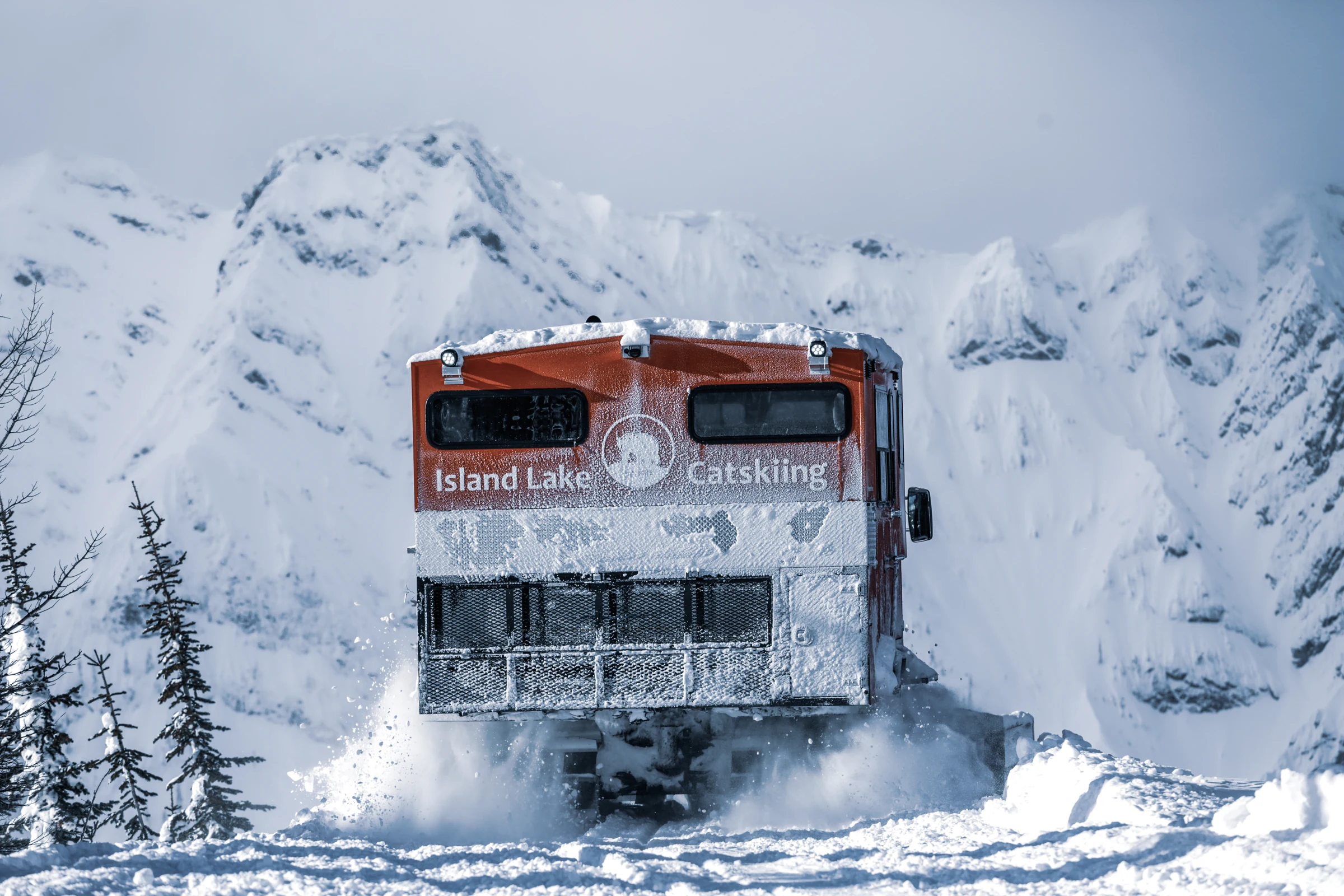
Our winter program brings 36 guests to 5,000 skiable acres in the Lizard Range, with 12 guests per snowcat. Guides choose the day’s terrain for the group and conditions.
Explore cat skiing at Island Lake
A guide to skiing in Canada
Start with the experience
Cat skiing takes you uphill in a snowcat; heli skiing takes you there in a helicopter. Both offer guided skiing and snowboarding in natural, ungroomed terrain. The right choice depends on the terrain you want, your ability, your budget and how you like to spend a day in the mountains.
For many guests, cat skiing is the more pleasurable way to spend the day: a quieter ride, a warm cabin and time to relax with friends between runs. Heli skiing’s advantage is reach: a helicopter can cover more terrain and look for snow in places a cat cannot get to. You can have an exceptional day on serious mountain terrain with either.
This guide is published by Island Lake Lodge, a cat skiing operation near Fernie, British Columbia. We explain our own program where useful; heli skiing details vary by operator.
At a glance
Use this as a starting point, then check the details of the tour you are considering. On a small screen, scroll the table sideways.
| What to compare | Cat skiing | Heli skiing |
|---|---|---|
| The ride uphill | A snowcat follows an established mountain road network. At Island Lake, you ride in a heated cabin. | A helicopter flies between designated pickups and landing sites, subject to flying conditions. |
| Terrain access | Runs connect to the snowcat road network. Depending on the operation, that can include alpine bowls, glades and steep terrain. | Aircraft can search farther afield for snow and reach terrain beyond a road network, including some more remote or extreme lines. Access depends on the operation and conditions. |
| Pace and group size | A relaxed ride with time to talk, warm up and enjoy your friends’ company. Island Lake carries 12 guests per snowcat and typically skis 12–15 runs a day. | Group size and pace depend on the aircraft and package, including how many groups share a helicopter. |
| Weather | No down days caused by helicopter flying restrictions. Snow stability, visibility for skiing and road conditions can still limit or stop cat skiing. | Visibility, wind and flying conditions affect operations. Some operators have sheltered tree skiing options; down days remain possible. |
| Ability | Choose a program suited to your powder experience and fitness. A snowcat does not make the skiing beginner terrain. | Choose the operator and program for your ability. A helicopter ride does not mean every run will be steep or extreme. |
| Price | Compare the complete package, accommodation, equipment, transfers, taxes and extras. A day trip and a lodge tour are different products. | Check the same inclusions, plus how flight time or vertical is priced and what any minimum or refund policy actually covers. |
| Mountain risks | Avalanches, tree wells, changing snow, collisions and vehicle travel require attention and clear operating procedures. | Backcountry hazards remain, with additional helicopter loading, unloading and flight procedures. |
The ride is part of the pleasure
There is something special about climbing back into a warm snowcat after a run. Peel off a layer, have a snack and replay that last turn with the people beside you. You have time to catch your breath and enjoy being together before the next drop-off.
Compared with repeated helicopter takeoffs and landings, the ride has a quieter, more relaxed feel. Snowcats still have engine noise, but there is no rotor noise or aircraft loading routine between runs. For many skiers and riders, that easy time with friends makes the whole day more enjoyable.
At Island Lake, twelve guests share each cat. The conversation on the way up becomes as much a part of the trip as the turns on the way down.
A full day on the mountain
A slower ride uphill does not mean a short day of skiing. At Island Lake, a typical day brings 12–15 runs. On later days of a tour, the cats normally leave around 9 a.m. and return around 4 p.m.; your first morning includes safety training.
We plan our days so you come home feeling you have had your fill: legs worked, plenty of turns behind you and an evening at the lodge to look forward to. The time in the cat lets you warm up and recover between runs, helping you enjoy the full day.
Snow, weather, group pace and your guides’ decisions set the actual number of runs. Ask either operator about a typical day and read the terms behind any guarantee. The vertical range of a mountain is different from the total descent you ski over a day.
Big terrain, with or without a helicopter
Island Lake’s 5,000 skiable acres in the Lizard Range include open alpine bowls, steep fall lines, rolling pillows and old-growth glades. There is serious, challenging skiing here for experienced guests who want it, as well as terrain with a gentler rhythm. Arriving by snowcat does not limit you to easy slopes.
Heli skiing’s real advantage is the ability to range farther. A helicopter can move beyond a snowcat road network to look for better snow on a different aspect or in another valley. Depending on the operation, it may also reach more remote or more extreme terrain.
That extra reach is appealing if exploring a wider area is central to your trip. At Island Lake, a lack of challenging terrain is not the reason to choose a helicopter: the mountain already offers demanding lines. What is available on any day depends on snow stability, visibility and the group’s ability. Your guides make that call.
Compare the full trip
Cat skiing can offer a lower-cost way into guided backcountry skiing, but there is no useful single price for either activity. A day trip, a multi-day lodge tour and a private group package can have very different inclusions. Season, room type and group size also affect the quote.
Start with the total price for the same number of ski days, in the same currency. Then check accommodation, meals, equipment, ground or air transfers, taxes and gratuities. For heli skiing, confirm whether vertical or flight time is included, capped or charged separately, and what happens if you ski more or less than planned.
Some operators publish a minimum vertical allowance with refund terms. That is a contractual policy, not a promise of powder or a particular amount of skiing every day. Read the weather, cancellation and early-departure terms for the actual tour.
At Island Lake, multi-day packages include guided cat skiing or snowboarding, lodge accommodation, meals, powder equipment and the on-mountain photography program. Bring your own boots. Airport transport, spa treatments, drinks and gratuities are extra; reservations confirms taxes and the final quote.
Choose the right program
Match the program to your skiing, not just the name of the activity. Some trips suit experienced powder skiers who want a fast pace; others are designed for a different level. Neither cat skiing nor heli skiing should be treated as a beginner powder lesson unless the operator explicitly offers that kind of program.
At Island Lake, you should be a strong intermediate skier or snowboarder or better, comfortable making controlled turns in varied, ungroomed snow and fit for consecutive full days. You do not need to jump cliffs. You do need to explain your experience honestly before booking.
Tell reservations where you usually ski, how you handle deep or difficult snow, how often you ride off piste and who is coming with you. Ask about group matching and what happens if you tire or want to sit out a run. At Island Lake, tell your guide early; you can take a break in the cat or discuss a return to the lodge.
The advantage of staying on the ground
A heli skiing trip depends on suitable flying conditions. Low cloud, poor visibility or wind can delay a start, shorten a day or keep the helicopter grounded. These interruptions are often called down days. How often they happen depends on the location, terrain and weather; some heli operations have sheltered tree skiing that gives them more options.
Cat skiing removes that particular dependency. Snowcats do not need helicopter flying visibility. When low cloud would prevent a flight but the snowcat roads and skiing conditions are suitable, we can keep heading uphill and making turns. There is no waiting for a helicopter flying window.
That is a meaningful advantage when you have travelled a long way for your ski days. It is also different from a promise that skiing can never be interrupted: severe weather, avalanche conditions, poor visibility for skiing or unsafe roads can still limit or stop cat skiing.
Ask a heli operator about its down-day record, alternative terrain and refund terms. With either trip, expect natural snow that changes through the day rather than guaranteed powder on every run.
Questions worth asking
Both activities take place in mountain terrain with hazards including avalanches, tree wells, changing snow and collisions. Cat skiing avoids helicopter flight risks during the ski day and has its own vehicle travel risks. The transport method alone cannot establish which trip is safer overall.
At Island Lake, your first morning includes mandatory safety training. The guiding and snow-safety teams assess conditions and choose terrain throughout the day; guests carry avalanche rescue equipment and a radio. Clear instructions, group travel and speaking up when you are tired or unsure are part of the experience.
Ask about guide qualifications, guest rescue training, the equipment provided, communication and emergency procedures. Heli skiing also requires aircraft safety instruction, including how to approach, load and leave the helicopter. Follow the operator’s procedures and your guides’ directions throughout the trip.
HeliCat Canada oversees a voluntary accreditation program for member operations. It is a useful part of researching an operator, alongside its specific safety information, risk disclosure and booking terms. Accreditation does not remove the risks of backcountry skiing.
Before you commit
Ask for the answers and booking terms before paying a deposit. A clear comparison is more useful than choosing from a starting price alone.
Our kind of mountain trip
Our winter program brings 36 guests to 5,000 skiable acres in the Lizard Range, with 12 guests per snowcat. Guides choose the day’s terrain for the group and conditions.
Explore cat skiing at Island LakeIn winter, your arrival includes a snowcat transfer from the lower parking area to the lodge. Spend your days on the mountain and your evenings around the dinner table.
See a winter trip itineraryCheck the current dates and CAD package prices, then tell reservations about your skiing, group size and preferred dates. If those dates are full, ask about the waitlist.
View dates & pricesGood to know
Straight answers to the questions we hear most.
Island Lake typically skis 12–15 runs in a day. We plan a full day of skiing with time to warm up between runs, so you can finish feeling you have had your fill. The final number depends on snow, weather, group pace and guide decisions; it is not a guaranteed run count.
No. Island Lake has steep alpine bowls, fall lines, pillows and demanding tree skiing for experienced skiers and snowboarders. A helicopter can reach additional terrain beyond a snowcat road network, but it is not a requirement for a challenging day. Guides choose terrain according to conditions and the group.
Both are guided skiing or snowboarding in natural, ungroomed mountain terrain. Cat skiing uses a snowcat and its road network for the ride uphill; heli skiing uses a helicopter. That changes the journey between runs and the terrain the operator can reach.
Cat skiing can cost less, but the vehicle alone is not a reliable price comparison. Trip length, season, group size, accommodation and inclusions all matter. Compare complete quotes for the same number of ski days, including taxes, transfers, equipment and any extra vertical or flight charges.
Neither is automatically easier. Terrain, snow, group pace and the program you book determine the challenge. At Island Lake, guests need strong intermediate ability or better, experience in varied ungroomed snow and fitness for consecutive full days.
Yes, when the issue is helicopter flying conditions and the skiing and snowcat roads remain suitable. Cat skiing has no helicopter flying down days. Poor visibility for skiing, avalanche conditions, severe weather or unsafe roads can still restrict or stop operations.
Cat skiing avoids helicopter flight risks during the ski day, but it still involves backcountry and vehicle hazards. The vehicle alone does not establish which trip is safer overall. Ask about guide qualifications, operating standards, guest training and emergency procedures.
Yes, both can accommodate snowboarders. Ask each operator about the required riding ability, traverses and flat sections, equipment and group matching. At Island Lake, strong intermediate riders or better should be comfortable in varied snow and fit for full days.
Island Lake offers guided cat skiing and snowboarding near Fernie, British Columbia. In winter, guests travel from the lower parking area to the lodge by snowcat. The winter program is built around multi-day lodge tours.
Further reading
This comparison was prepared from Island Lake’s published trip information, HeliCat Canada’s accreditation guidance and Last Frontier’s published heli skiing program. The heli skiing examples describe possible formats, not every operator’s offer. Check current terms directly before booking.
Published by Island Lake Lodge · Updated
A conversation is the beginning
Tell us your dates, your group size, and what you have in mind.
Our concierge will help you plan the stay.